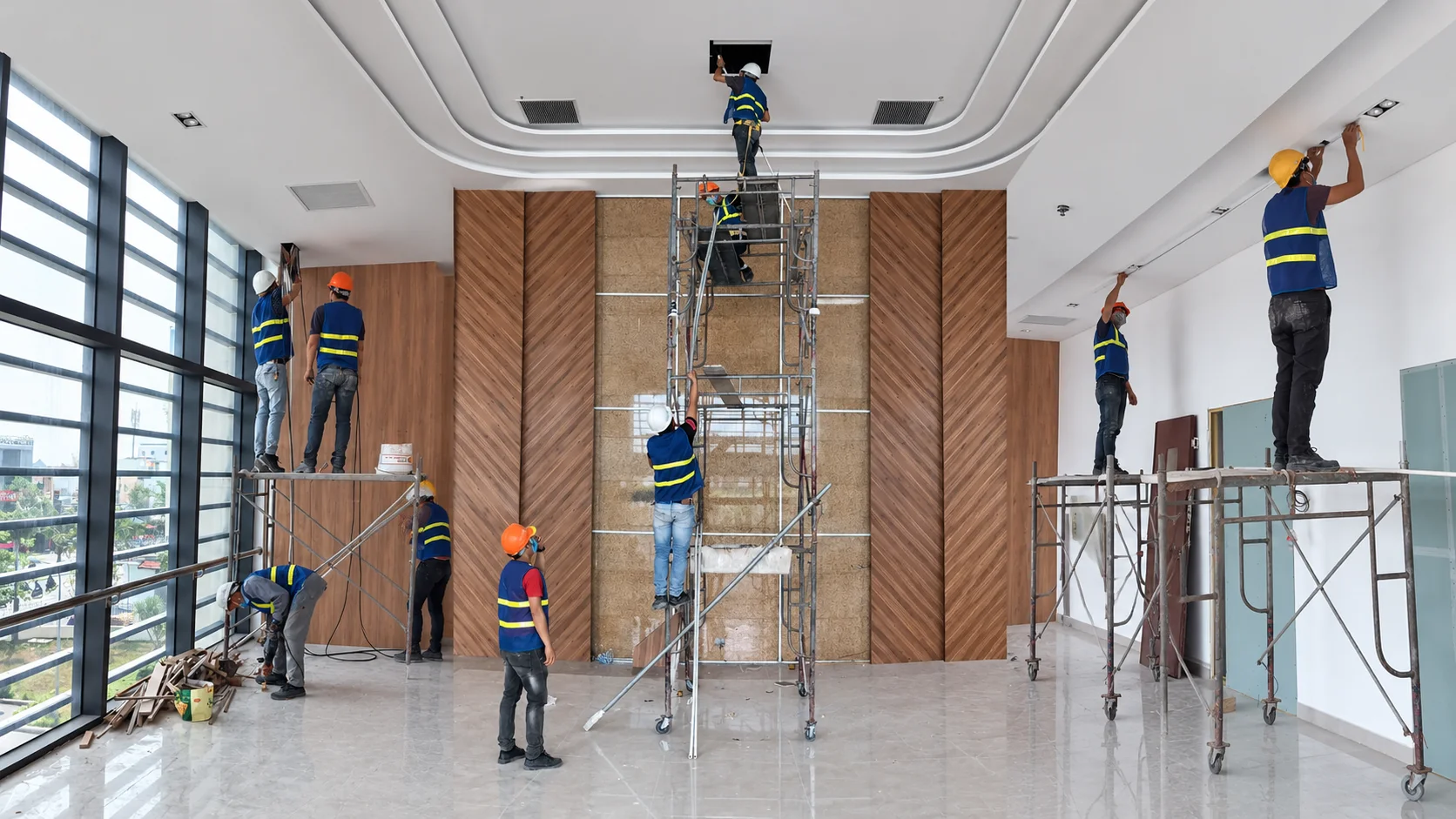


A network outlet, camera or door controller depends on more than the device itself. Signal cables, power delivery, distribution cabinets and clear ownership of system configuration determine whether the installation is practical to manage.
BILOCO works on structured cabling and agreed ELV infrastructure, including communications cabinets, CCTV and access control. Identification, testing and useful handover records matter when a facility later needs to trace a fault or move equipment.
Structured cabling and communications cabinets
Data cabling needs appropriate routing, bend radius, separation from electrical interference and distribution to each outlet. Clear point schedules and labels at both ends help connect field outlets to communications cabinets.
Patch panels, cable management, switches and any specified backup power should remain serviceable. Copper or fibre media and network configurations depend on approved design, distance, capacity and site constraints.
CCTV and video infrastructure
Camera locations should follow actual coverage needs, lighting conditions, cable access and privacy requirements. The easiest installation point is not always the most useful viewpoint.
PoE or local power, uplinks, equipment cabinets and storage arrangements should be defined. Retention periods, viewing permissions and video-data handling are owner decisions subject to applicable requirements, not universal defaults.
Access control and equipment interfaces
Access control requires clarity about controlled doors, credentials, lock behaviour, exit functions and power-loss or emergency scenarios. Life-safety interfaces need to follow the approved design.
ELV systems may interact with internal networks, intercom, alarms or public-address equipment. Such functions should be included only when documented with defined integration responsibilities.
Cable testing and handover information
Cable tests should match the installed media and agreed criteria, with results traceable to point identifiers. CCTV and access-control devices require functional, power and signal checks.
Handover should include topology, outlet schedules, cabinet locations, changes from design and relevant administration guidance. Administrative credentials must be transferred securely and never exposed in public website material.
Planning for changes and growth
Consistent labelling, current drawings and documented spare capacity can simplify later changes when production lines move or new cameras and outlets are added.
It is useful to decide early who maintains cabling and hardware, and who manages applications and credentials. Clear boundaries lead to better fault handling after installation.
Defining ELV endpoints and functions
Mark network outlets, camera coverage areas, controlled doors and cabinet locations on a building plan. Video coverage is more useful than a camera count alone; access-control requirements should describe door behaviour and emergency egress.
- Endpoint quantities, positions and cabling or hardware types.
- Video quality, retention, access rights and monitoring expectations.
- Existing networks, configuration boundaries and account handover ownership.
Administrative credentials should be transferred securely, never embedded in public-facing drawings or service articles.
Frequently asked questions
Data cabling needs appropriate routing, bend radius, separation from electrical interference and distribution to each outlet. Clear point schedules and labels at both ends help connect field outlets to communications cabinets.
Patch panels, cable management, switches and any specified backup power should remain serviceable. Copper or fibre media and network configurations depend on approved design, distance, capac…
Camera locations should follow actual coverage needs, lighting conditions, cable access and privacy requirements. The easiest installation point is not always the most useful viewpoint.
PoE or local power, uplinks, equipment cabinets and storage arrangements should be defined. Retention periods, viewing permissions and video-data handling are owner decisions subject to applicable requirements, not universal defaults.
Access control requires clarity about controlled doors, credentials, lock behaviour, exit functions and power-loss or emergency scenarios. Life-safety interfaces need to follow the approved design.
ELV systems may interact with internal networks, intercom, alarms or public-address equipment. Such functions should be included only when documented with defined integration responsibilities.
Cable tests should match the installed media and agreed criteria, with results traceable to point identifiers. CCTV and access-control devices require functional, power and signal checks.
Handover should include topology, outlet schedules, cabinet locations, changes from design and relevant administration guidance. Administrative credentials must be transferred securely and never exposed in public website material.
Consistent labelling, current drawings and documented spare capacity can simplify later changes when production lines move or new cameras and outlets are added.
It is useful to decide early who maintains cabling and hardware, and who manages applications and credentials. Clear boundaries lead to better fault handling after installation.